What is a Rubber Mixing Mill and How Does It Work?
A rubber mixing mill is a vital machine in the rubber industry. This equipment plays a crucial role in blending different rubber materials. The 9 Rubber Mixing Mill models are instrumental in creating the perfect rubber compounds. They ensure a consistent mix, which is essential for quality control.
Understanding the workings of a rubber mixing mill can be complex. The process involves heating and shearing the rubber to achieve desired properties. It’s fascinating yet challenging, as operators must monitor temperature and mixing speed closely. Each adjustment influences the final product dramatically.
Operators sometimes face difficulties in achieving the ideal mix. It requires practice and keen observation. Mistakes can lead to inconsistent quality and wasted materials. The art of using a rubber mixing mill involves not just machines but also human skill and experience. This blend of technology and craftsmanship shapes the future of rubber processing.
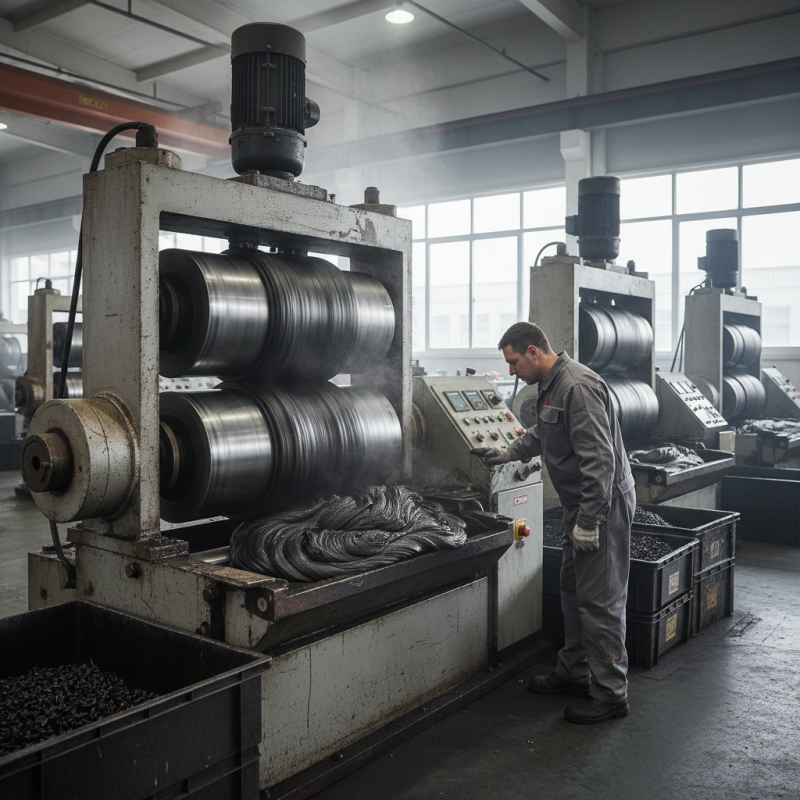
What is a Rubber Mixing Mill? Definition and Overview
A rubber mixing mill is a vital machine in the rubber industry. It is primarily used for mixing, refining, and processing rubber compounds. The mill consists of two large, rotating rollers, usually made of steel. These rollers turn at different speeds, which creates a shearing action that helps incorporate materials effectively.
In a typical operation, rubber and various additives are fed into the mill. The heat generated by the friction between the rollers helps soften the rubber. As the rubber moves through the gap between the rollers, it gets mixed thoroughly. The process continues until the desired homogeneity is achieved. Sometimes, operators face challenges. Adjusting temperature and roller speed can be tricky. Even small variations can lead to inconsistent mixtures.
The design of a rubber mixing mill is relatively simple, but the operation requires skill. Poor mixing can result in defects in the final products. Operators must continuously monitor the process. It’s a task that demands precision and experience. The outcome is a mix that meets necessary specifications, but that can be hard to achieve. Balancing efficiency with quality control is a constant struggle in this industry.
Key Components of a Rubber Mixing Mill: A Detailed Breakdown
A rubber mixing mill is an essential piece of machinery in the rubber industry. It plays a vital role in blending various rubber compounds. The mill consists of two large, counter-rotating rollers. These rollers apply shear forces to the rubber, mixing the materials thoroughly. The temperature of the rubber can also be adjusted during the mixing process. This is crucial for achieving the desired consistency.
Key components of a rubber mixing mill include the rollers, feeder, and control panel. The rollers are usually made of hard steel, designed to withstand wear. The feeder introduces the rubber into the mixing zone. This component must be efficient to prevent jams. A poorly designed feeder can disrupt the entire process. The control panel regulates the speed and temperature. It requires careful calibration to ensure optimal mixing.
While these components are crucial, issues can arise. Sometimes, uneven mixing occurs, leading to quality inconsistencies. Regular maintenance is necessary but often neglected. Operators need proper training to handle the machinery effectively. Mistakes can result in wasted materials and time. Addressing these challenges is essential for improving production efficiency.
The Mixing Process: How Rubber is Combined with Additives
The mixing process plays a crucial role in rubber manufacturing. It involves combining natural or synthetic rubber with various additives. These may include fillers, plasticizers, accelerators, and vulcanizing agents. Each additive serves a specific purpose, enhancing the properties of the final product. For instance, carbon black acts as a reinforcing filler, improving strength and durability.
Rubber mixing mills utilize large rollers to achieve a homogenous blend. The materials are fed into the mill, where they are mechanically mixed. The heat generated during this process can affect consistency. If the heat is too high, it may degrade the rubber. The operator must closely monitor the temperature and adjust it accordingly. This step requires skill and experience, as even minor mistakes can lead to significant issues.
In some cases, achieving the perfect mix can be a challenge. The proportions of additives must be precise. Over- or under-mixing can compromise product quality. Manufacturers often experiment with different formulations. They must be vigilant and ready to adjust based on test results. Continuous improvement is essential for optimal performance in the rubber industry.
Industry Applications of Rubber Mixing Mills in Manufacturing
Rubber mixing mills play a crucial role in various industries, particularly in rubber manufacturing. These machines efficiently blend raw rubber with additives, ensuring a homogeneous mixture. This process is essential for producing high-quality rubber products such as tires, gaskets, and seals. Without proper mixing, the performance of rubber compounds can be compromised, leading to subpar results.
In the automotive industry, rubber mixing mills help in creating durable tire compounds that withstand wear and tear. The precision of these mills influences tire performance, safety, and longevity. In the construction sector, rubber-based materials offer excellent insulation and water-resistant properties. Yet, achieving the ideal mixture can be challenging. Sometimes the consistency is uneven, risking product integrity.
Another application is in the production of rubber flooring. Good mixing is vital here to ensure shock absorption and traction. However, not all mills achieve this perfectly. Operators need to monitor the mixing process closely. Even minor deviations can result in suboptimal products. This highlights the importance of continuous improvement in mixing techniques for better outcomes.
Performance Metrics: Efficiency and Output of Rubber Mixing Mills
Rubber mixing mills play a crucial role in the production of rubber products. These machines are designed to blend rubber compounds efficiently. The performance of a rubber mixing mill can significantly affect the final product's quality. When evaluating efficiency, key factors include processing speed and energy consumption.
Efficiency can vary widely between mills. Some models may claim high output but underperform in blending consistency. The ideal mill will balance speed with quality, ensuring thorough mixing. Operators often face challenges in achieving this balance. Adjustments might be needed for different rubber types. Operator skill and experience are crucial.
Output is also measured by how well the mill meets production demands. A mill that operates slowly may fall short of requirements. On the other hand, a mill running too fast may compromise the mixing quality. Monitoring these metrics is essential for optimizing production. Inefficiencies might arise from outdated technology or poor maintenance. Regular checks can help maintain performance levels and extend machine life.
Rubber Mixing Mill Performance Metrics
| Parameter | Description | Standard Measurement | Typical Value |
| Roller Diameter | Diameter of the rollers used in the mill | inches (in) | 10 - 14 |
| Capacity | Maximum amount of rubber mix processed in one cycle | kilograms (kg) | 200 - 800 |
| Mixing Time | Time taken for a complete mixing cycle | minutes (min) | 5 - 20 |
| Energy Consumption | Energy used during mixing expressed in kWh | kilowatt-hour (kWh) | 3 - 10 |
| Temperature Control Range | Optimal mixing temperature range | Celsius (°C) | 20 - 90 |
| Output Quality | Quality score of the rubber mix | Quality Index (QI) | 80 - 95 |