How to Choose the Best Car Engine Stand for Your Project?
Choosing the right car engine stand is crucial for any automotive project. An ideal engine stand offers stability and ease of use. According to a recent report by the Automotive Engineering Society, over 70% of professionals recommend using quality engine stands for optimal safety.
Many engine stands can support engines weighing up to 1,500 pounds. However, not all stands are created equal. Some may lack the necessary durability or flexibility for specific projects. This can lead to frustrating experiences, potentially damaging both the engine and your workspace. It's important to consider factors like weight capacity, adjustable height, and wheel maneuverability.
Selecting a car engine stand can feel overwhelming. The sheer number of options available often creates confusion. Investing in a reliable stand will save time and effort in the long run. A well-chosen engine stand enhances the overall efficiency of your automotive work. Always reflect on your project needs and make informed choices to avoid costly mistakes.
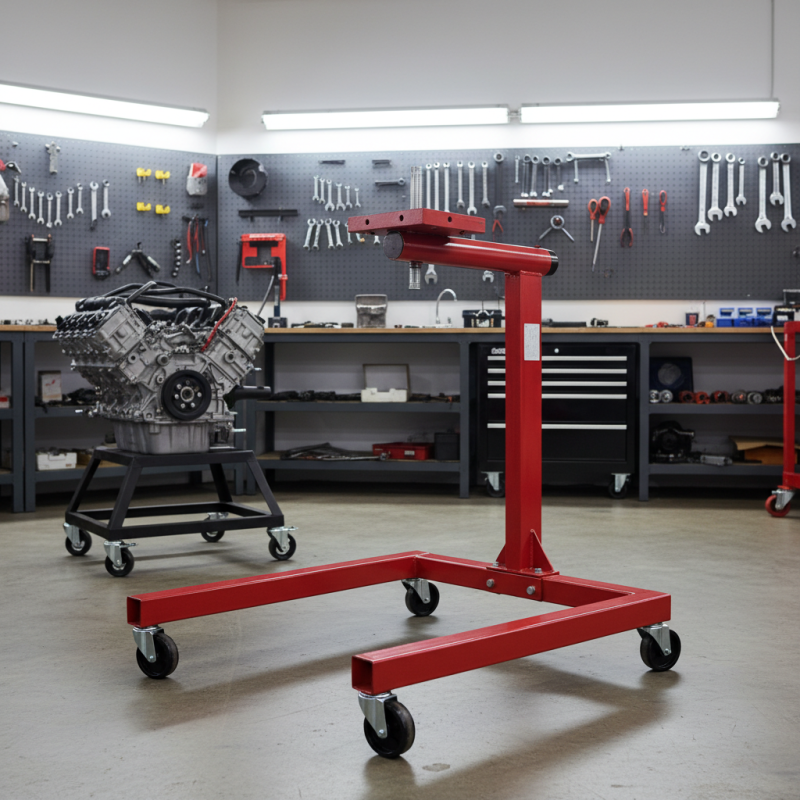
Understanding the Importance of a Car Engine Stand in Mechanical Projects
A car engine stand serves as a vital tool in mechanical projects. It raises, supports, and secures an engine during repairs or rebuilds. Without a good stand, working on an engine can be both dangerous and inefficient. The stability it provides is essential for any serious mechanic.
Tips: Consider the weight capacity of the stand. Ensure it can hold the engine you’re working on. Check the height as well. A stand that's too low can make your work uncomfortable. You should also think about how often you will use it. A more robust stand might be worth the investment if you're working on multiple projects.
Choosing the right car engine stand can feel overwhelming. Various designs are available, each with different features. Some stands are collapsible, which is great for storage. But they may lack sturdiness. Try to remember that a stand should be a long-term investment. A solid stand can enhance your work environment and improve safety.
Key Features to Look for in a High-Quality Engine Stand
When choosing an engine stand, certain features are crucial. Look for a sturdy frame made from quality materials. Steel is often preferred for its strength. A good engine stand can hold significant weight. The last thing you want is a wobbly support while working on an engine.
Adjustability is another key factor. Many stands offer various height and angle options. This flexibility can make your project easier. However, some stands may not adjust as smoothly as hoped. Check for any sticking or jerking motions. They can be frustrating when you're trying to align an engine.
Swivel casters are also important. They allow for easy movement around your workspace. Some stands have locking mechanisms for added safety. Ensure they function properly before using the stand. While trying to tighten or secure an engine, unexpected movements can be dangerous. It's best to choose a stand that meets all your needs while keeping safety in mind.
Assessing Weight Capacity: Selecting an Engine Stand for Your Engine Size
When selecting an engine stand, weight capacity is key. Different engines have varying weights. Some can weigh hundreds of pounds. Others may be lighter. Knowing your engine's weight is crucial. Most engine stands specify their weight limits. Exceeding that limit may lead to accidents. It can be dangerous to work with a stand that cannot support your engine.
Measure your engine size before making a purchase. An engine's dimensions affect balance on the stand. A poorly balanced engine can tip over. Look for features like adjustable arms. These can help fit various engine sizes. Ensure the stand can handle not just the weight, but also the design of your engine. Finding the right fit may take time. Not all stands suit every project.
Consider your workspace too. The size of your garage or shop affects your choice. A large, heavy-duty stand may not fit in a small area. Think about how often you will use it. If it's a one-time project, a lighter, less expensive model could suffice. It’s important to choose wisely, as the wrong stand may create issues. Reflecting on your needs will guide you to the right decision.
Comparison of Engine Stand Materials: Steel vs. Aluminum for Durability
When choosing an engine stand, material matters. Steel and aluminum stand out in performance but differ significantly. Steel is heavy, offering excellent stability. This reduces the risk of tipping when supporting a heavy engine. However, its weight can be a disadvantage during transportation.
Aluminum, on the other hand, is lightweight. This makes moving an engine stand much easier. But lighter does not always mean better. Aluminum may bend or dent under heavy loads. For smaller engines, it’s a solid choice. However, for larger motors, steel shines in providing durability and strength.
Both materials have pros and cons. Think about your project needs. Consider the weight of your engine and how often you’ll move the stand. Reflect on whether durability or portability is more crucial for you. Balancing these factors can lead to better decisions.
How to Choose the Best Car Engine Stand for Your Project? - Comparison of Engine Stand Materials: Steel vs. Aluminum for Durability
| Feature | Steel Engine Stand | Aluminum Engine Stand |
| Weight | Heavy | Light |
| Durability | High | Moderate |
| Corrosion Resistance | Low | High |
| Cost | Moderate | Higher |
| Load Capacity | High | Moderate |
| Ease of Mobility | Lower | Higher |
Understanding Assembly and Portability: Choosing the Right Design for Your Needs
When selecting a car engine stand, consider assembly and portability. An effective stand should provide stability while being easy to assemble and transport. Many models require minimal tools to set up, often taking less than 30 minutes. This feature is crucial for hobbyists who may lack extensive mechanical experience.
Portability matters too. A lightweight stand allows flexibility and convenience. According to industry reports, about 60% of engine stand users prioritizing portability find it enhances their workspace efficiency. Short distances can be challenging if your stand is cumbersome. Thus, look for designs that offer compact folding capabilities.
Tips: Always check the weight capacity. Ensure it meets your engine's specifications. A stand that can hold 1,500 pounds is a good benchmark for most small to mid-sized engines. Additionally, consider a model with adjustable height. This can make your work more comfortable and reduce strain.
Another common oversight is overlooking the wheel design. Rubber wheels provide better traction and protect your garage floor. A cheap plastic wheel might cause instability. Investing in good wheels ensures your work area stays safe.